

Red Dress Day
A settlers reflection on MMIW

As a settler on Turtle Island, my privilege is clear. I come from European ancestry, British, Scottish, Irish…the really white ones, the ones who claimed the land as their own, just because they had enough money to cross the ocean for a new world.
I was fortunate to have been able to learn, both as a child and as an adult, about the Indigenous people of Turtle Island. Growing up in Vancouver, I learned about the history of the people who first lived, learned and stewarded the land. I was introduced to how stories, history and lore are told using art, beading, and fashion. I learned about the significance of animals and how they hold a sacred space, playing a role in the journey of life in Indigenous cultures.
I learned the pretty parts and as I continued to grow, I learned what we don’t always learn. The “ugly” parts of history, the erasure of a population rich with culture, knowledge and understanding of the earth.
One of those parts of ugliness is the reason for Red Dress Day. For those unaware, May 5th is known as Red Dress Day, the National Day of Awareness for Missing and Murdered Indigenous Women. (MMIW).
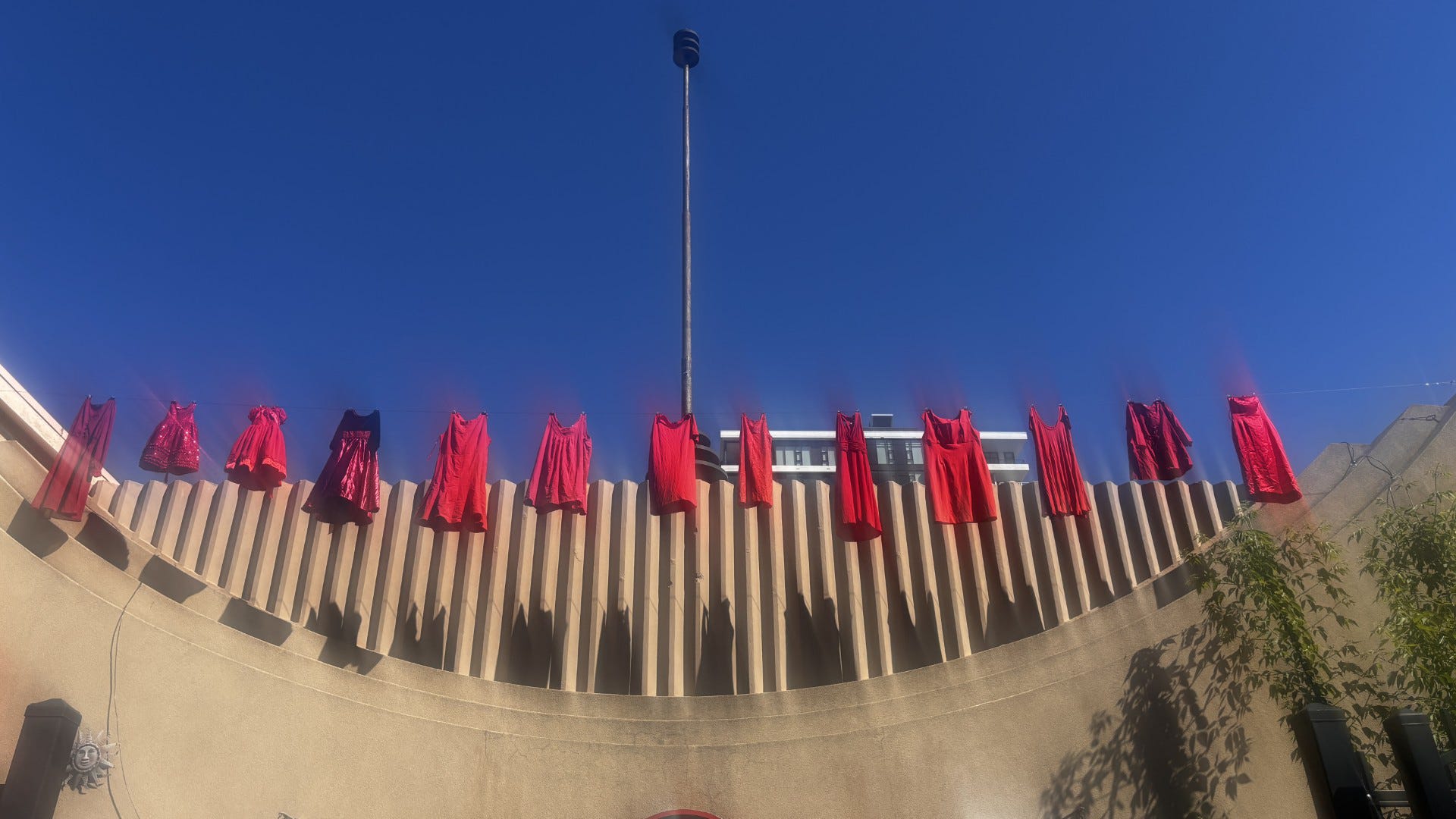
Red Dress Day began in 2010 when Métis artist, Jaime Black, used the red dress as a symbol to call attention to the astonishingly high rates of violence experienced by Indigenous women, girls and two-spirit folks.
“Indigenous women in the provinces were more likely than non-Indigenous women to have experienced violent victimization, with the comparison being 64 per cent of Indigenous women versus 45 per cent of non-Indigenous women in Atlantic provinces, 62 per cent versus 43 per cent in central Canada, 61 per cent versus 48 per cent in the Prairies, and 65 per cent versus 50 per cent in British Columbia.” – CBC News, 2022
Red dresses were hung in public spaces. They adorned trees, lamp posts, street signs and were a powerful display of the shocking number of MMIW. The dresses sparked discussions surrounding the violence and the underlying issues fueling it. Black’s visualization began The REDress Project and now has spread across the world evolving into a day to commemorate the lives lost and to call for justice for victims and families.
When I arrived at the march, I first encountered three elders from the community who commented on my red dress.
I responded in a typical Amber fashion and said “thanks, it has…” the women said “pockets” at the exact same moment. :)
I learned about the origin of one elders ribbon skirt, that bore the message “Family Matters”. She shared that her granddaughter had made it for her. I was smudged, a sacred tradition in Indigenous culture, and a ceremony I had not received before.
There was a power that I felt in that moment. A welcome into the space and a reminder of the importance of gathering and the respect that the day deserved.
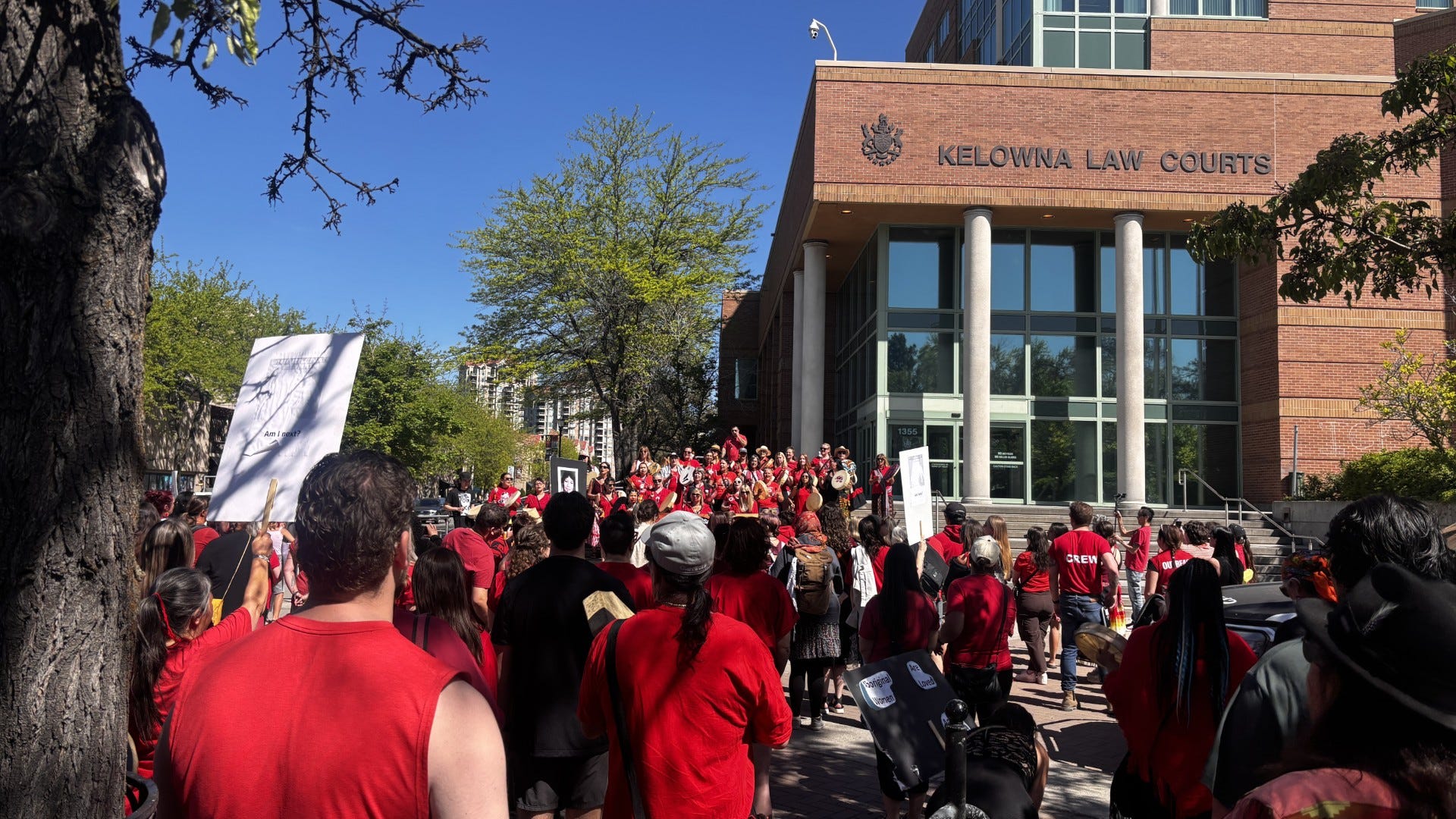
As the drumming began I felt it reverberate from the ground, filling me with an incredible sense of the profound impact that ingrained prejudices, systemic racism and sexism, and colonialism has shaped the lives of generations.
The resilience, fortitude and experiences of the Indigenous people, the original inhabitants of the land where my ancestors settled, are real. It is our responsibility as human beings to actively take part in reconciliation, to make change, to be better.
To the families who are mourning their missing sisters, mothers, cousins, and aunties and to the women, girls and two spirit individuals who never had the chance to do the things we take for granted, you DESERVE better.
Today, May 5th 2026, and everyday, I am standing with the Indigenous community with a commitment to honour those lives lost.
Wow, I didn't know about this day, but it's a perfect example of how a piece of clothing has the power to make the invisible visible.
So well written, articulate, erudite and heartfelt in a way few are able or strong enough to convey. Wonderful work and words Amber. Loved ot